
Geometric Bionics-Inspired Superhydrophobic Surfaces for Effective Antibacterial and Anti-fouling Applications—A Design Approach Leveraging Lotus-Effect Nanostructures on Polydimethylsiloxane (PDMS) Films
DOI:
https://doi.org/10.64504/big.d.v3i1.325Abstract
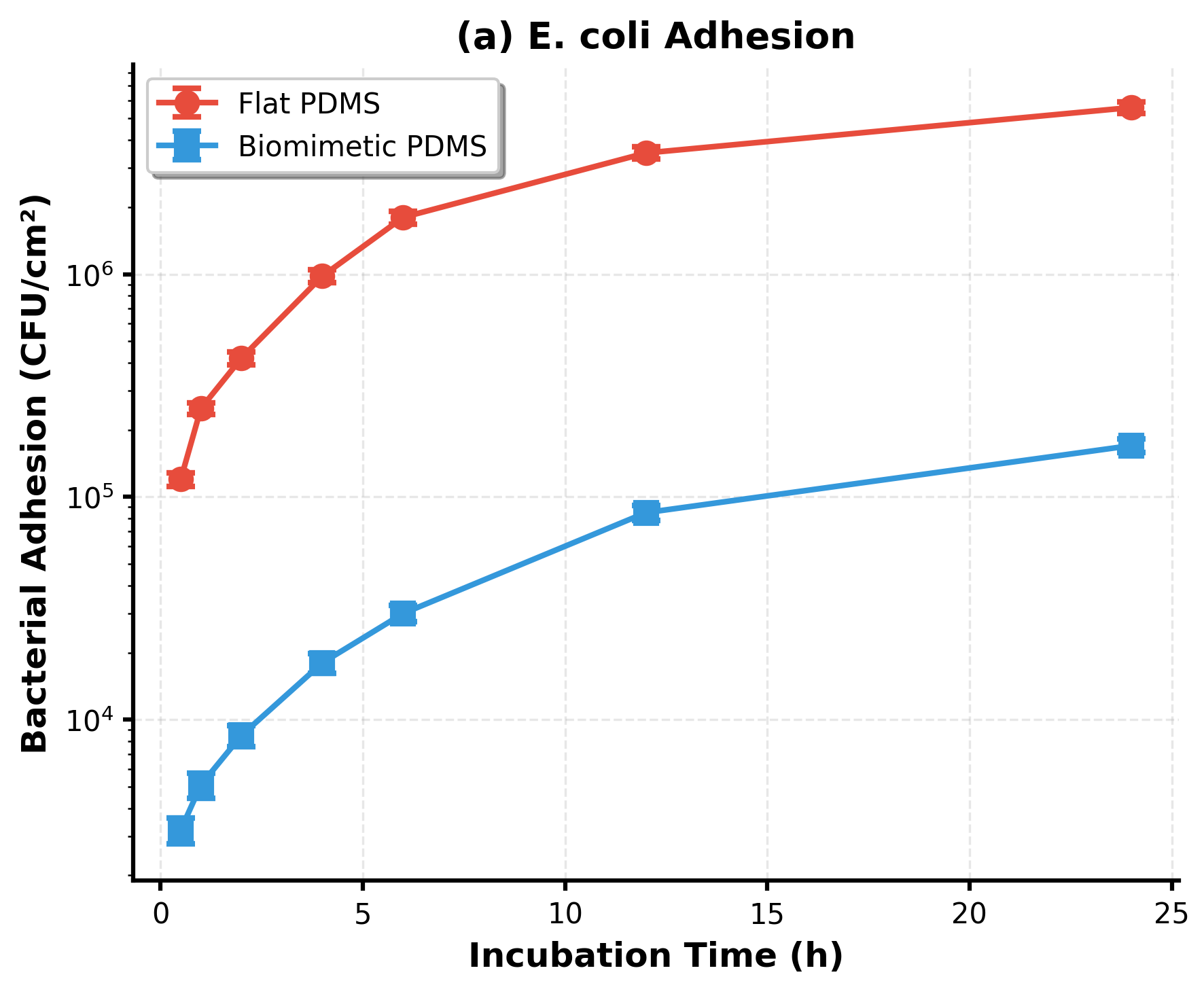
Bacterial adhesion and subsequent biofilm formation on surfaces pose a significant threat across various sectors, including healthcare, food safety, and marine industries. Conventional antibacterial strategies often rely on chemical agents or antibiotics, which can lead to environmental toxicity and the emergence of drug-resistant bacteria. Therefore, developing novel, environmentally friendly, and durable physical antibacterial methods is of paramount importance.Inspired by the self-cleaning properties of the lotus leaf, this study presents a facile and scalable template-assisted replication method to fabricate superhydrophobic surfaces with hierarchical micro- and nanostructures on a flexible polydimethylsiloxane (PDMS) substrate. The surface morphology and wettability were systematically characterized using Scanning Electron Microscopy (SEM), Atomic Force Microscopy (AFM), and Water Contact Angle (WCA) measurements. The antibacterial performance was evaluated against two common pathogenic bacteria, Escherichia coli (E. coli) and Staphylococcus aureus (S. aureus). Furthermore, the anti-fouling capability was assessed by quantifying the adsorption of bovine serum albumin (BSA). The biomimetic PDMS surfaces exhibited robust superhydrophobicity with a WCA exceeding 155° and a sliding angle (SA) below 5°. These surfaces demonstrated exceptional resistance to bacterial adhesion, reducing the attachment of both E. coli and S. aureus by over 95% after 24 hours of incubation compared to flat PDMS controls. This physical antibacterial effect is attributed to a stable Cassie-Baxter state, where a trapped air layer minimizes the contact area between bacteria and the material surface. Concurrently, protein adsorption was reduced by more than 95%, showcasing excellent anti-fouling properties. This research provides a novel and scalable design strategy for creating chemistry-free, long-lasting antibacterial and anti-fouling surfaces. The findings highlight the potential of leveraging geometric bionics to address the persistent challenges of surface contamination, offering a promising alternative to chemical-based approaches with broad applicability in biomedical devices, public health facilities, and marine engineering.
Downloads
Downloads
Published
Versions
- 2026-05-08 (2)
- 2026-01-06 (1)
How to Cite
Issue
Section
Categories
License
Copyright (c) 2026 BIG.D

This work is licensed under a Creative Commons Attribution-NonCommercial-NoDerivatives 4.0 International License.