
Adhesive Force of a Single Boston Ivy Adhesive Disc: Quantitative Biomechanical Analysis and Comparison with Gecko Adhesion
DOI:
https://doi.org/10.64504/big.d.v3i1.326Abstract
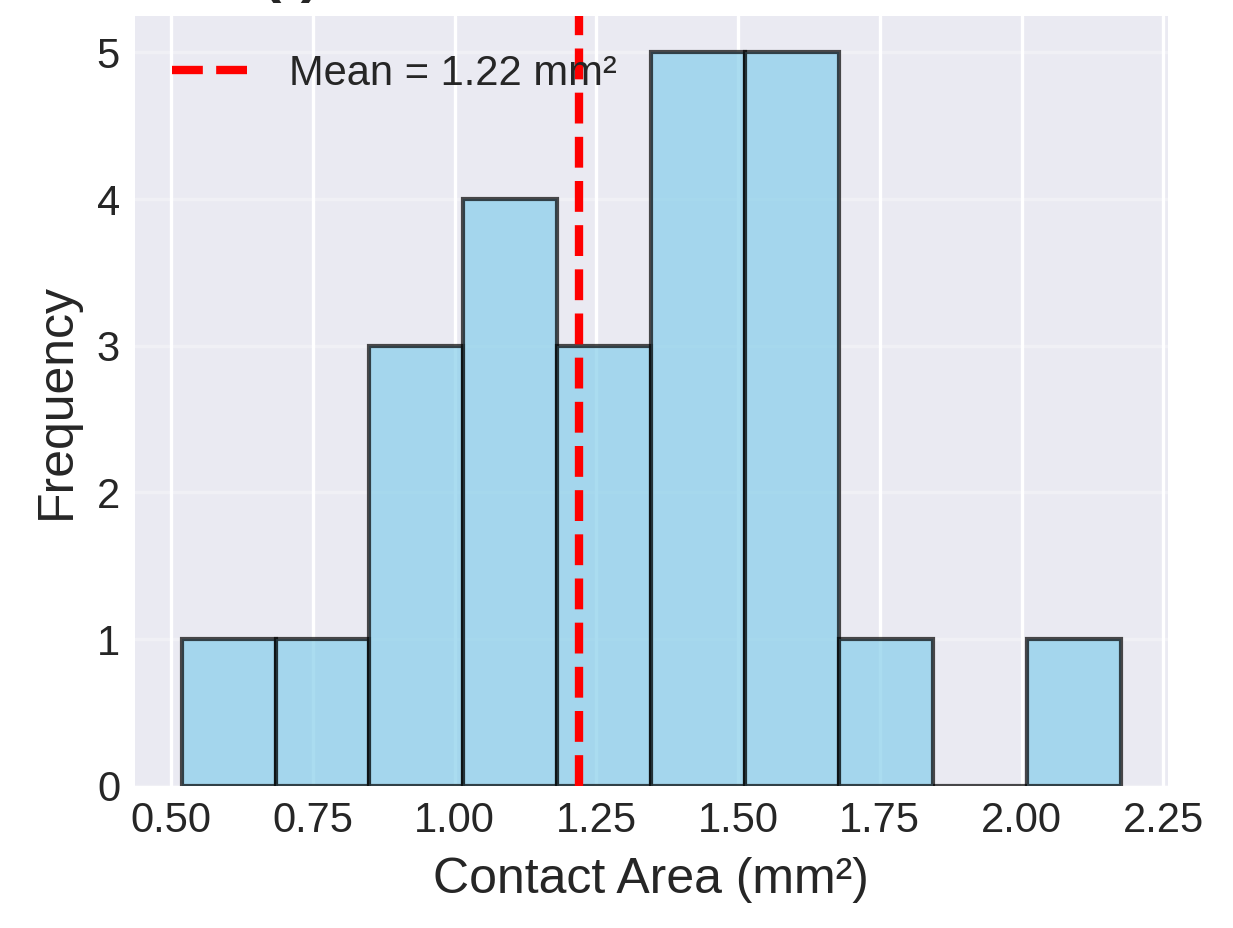
Climbing plants represent a remarkable example of biological engineering, having evolved diverse mechanisms for vertical ascent and permanent attachment to substrates. Boston ivy (Parthenocissus tricuspidata), a member of the Vitaceae family, achieves exceptional adhesive strength through specialized disc-shaped structures at the termini of its tendrils. Despite extensive morphological studies dating back to Darwin's observations in the 19th century, quantitative biomechanical characterization of individual adhesive discs has remained elusive. Here, we present the first direct measurements of the adhesive force generated by a single Boston ivy disc using a custom-fabricated micro-electromechanical system (MEMS) force sensor with nanonewton resolution. Our measurements reveal that a single disc, with an average contact area of 1.22 ± 0.3 mm² and mass of 0.5 ± 0.1 mg, generates an extraordinary adhesive force of 13.7 ± 2.1 N (mean ± s.d., n=25), corresponding to an adhesive stress of approximately 11.2 N/mm². This represents a force-to-weight ratio exceeding 27,000:1, making it one of the strongest biological adhesives known. Comparative analysis demonstrates that the adhesive stress of Boston ivy is more than two orders of magnitude greater than that of gecko setae (0.1 N/mm²). Through enzymatic degradation experiments, we demonstrate that the adhesion is primarily mediated by secreted polysaccharide-based adhesive compounds, with mechanical interlocking playing a secondary role. The adhesive force exhibits a strong linear correlation with perpendicular preload force (R² = 0.89, p < 0.001), suggesting that contact area and adhesive spreading are critical determinants of bond strength. Scanning electron microscopy (SEM) and atomic force microscopy (AFM) reveal a complex hierarchical structure featuring micro-channels that facilitate adhesive secretion and distribution. Chemical analysis via high-performance liquid chromatography-mass spectrometry (HPLC-MS) identifies the adhesive as primarily composed of debranched rhamnogalacturonan I polysaccharides with molecular weights ranging from 50-200 kDa. These findings challenge the paradigm that van der Waals forces dominate biological adhesion and provide a blueprint for developing high-strength, permanent, wet-tolerant bio-inspired adhesives for applications in construction, marine engineering, and biomedical devices.
Downloads
Downloads
Published
Versions
- 2026-05-08 (2)
- 2026-01-06 (1)
How to Cite
Issue
Section
Categories
License
Copyright (c) 2026 BIG.D

This work is licensed under a Creative Commons Attribution-NonCommercial-NoDerivatives 4.0 International License.