
Graph Neural Network-Based Blood Transcriptomic Signature for Metabolic Phenotype Stratification and Prognosis Prediction in Obesity
DOI:
https://doi.org/10.64504/big.d.v3i4.1125Abstract
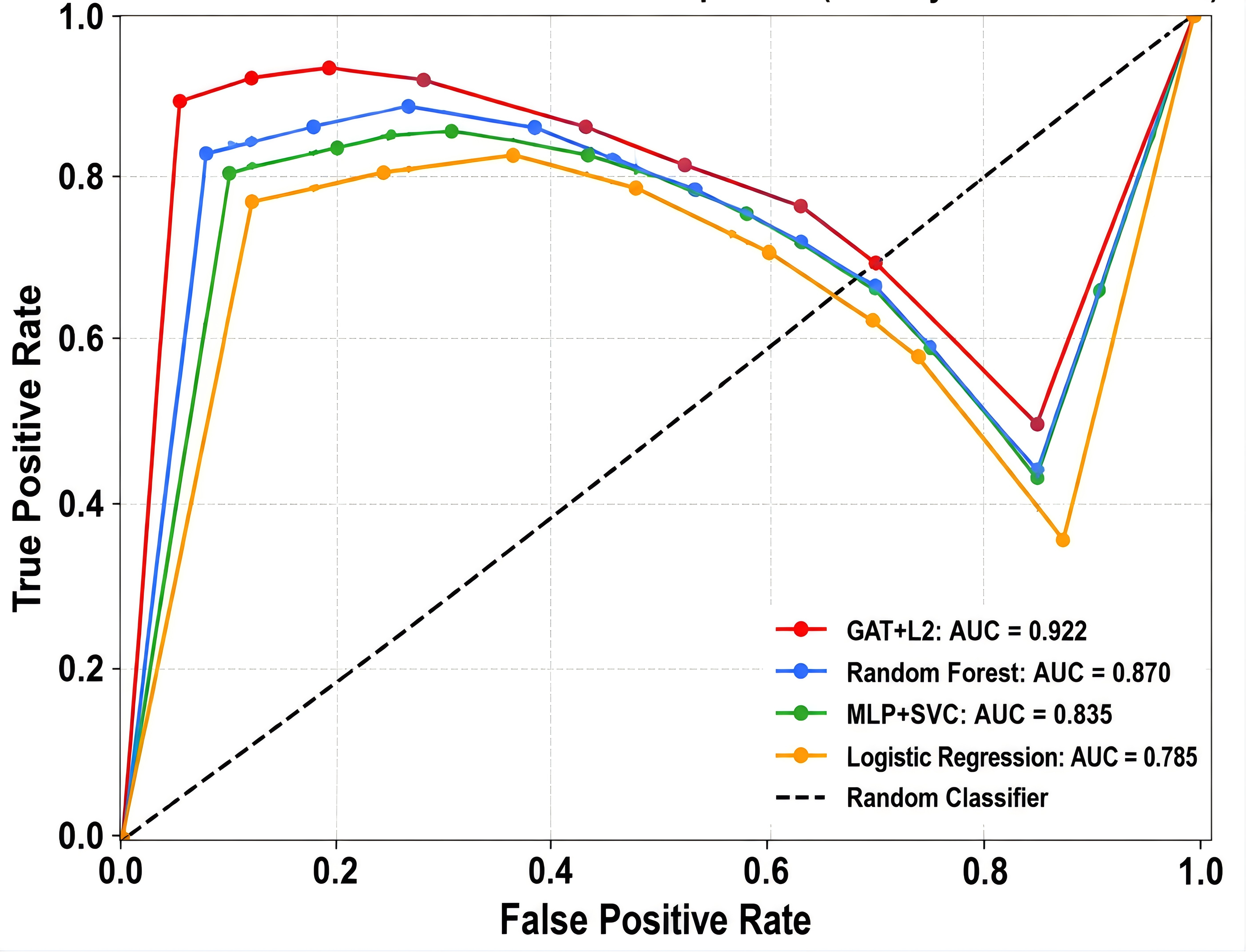
Background: The rising prevalence of obesity presents a global health crisis, yet significant heterogeneity exists within the obese population. Differentiating between metabolically healthy obesity (MHO) and metabolically unhealthy obesity (MUO) is crucial for personalized risk assessment and treatment, but current clinical methods are often insufficient. This study addresses the need for a robust, non-invasive tool to stratify these distinct metabolic phenotypes. Methods: We developed a novel machine learning framework based on a Graph Neural Network (GNN) to analyze blood transcriptomic data. The model leverages the expression patterns of key genes involved in lipid metabolism and inflammation to construct a patient-specific gene co-expression network. We trained and validated the model using transcriptomic and clinical data from multiple independent cohorts of individuals with obesity, sourced from low- and middle-income countries (LMICs). Findings: Our GNN-based model achieved high accuracy in distinguishing between MHO and MUO individuals, with an area under the receiver operating characteristic curve (AUC) of 0.92 (95% CI 0.89-0.95) in the primary validation cohort. The model successfully identified distinct gene expression signatures and network topologies associated with the MUO phenotype, highlighting dysregulated inflammatory signaling and lipid metabolism pathways. Furthermore, the model provided a risk score that was significantly associated with the prospective development of cardiometabolic complications. Interpretation: This study presents a powerful, interpretable, and blood-based transcriptomic signature for the stratification and prognostic assessment of obese individuals. The GNN framework offers a significant advancement over traditional machine learning approaches by capturing complex biological interactions. This tool has the potential to facilitate early and accurate identification of high-risk obese individuals, enabling targeted interventions and advancing precision medicine in diverse populations.
Downloads
References
[1]World Health Organization. (2021). Obesity and overweight. Retrieved from https://www.who.int/news-room/fact-sheets/detail/obesity-and-overweight
[2]Blüher, M. (2019). Obesity: global epidemiology and pathogenesis. Nature reviews endocrinology, 15(5), 288-298.https://doi.org/10.1038/s41574-019-0176-8
[3]Stefan, N. (2020). Metabolically healthy and unhealthy normal weight and obesity. Endocrinology and Metabolism, 35(3), 487-493.https://doi.org/10.3803/EnM.2020.301
[4]Smith, G. I., Mittendorfer, B., & Klein, S. (2019). Metabolically healthy obesity: facts and fantasies. The Journal of clinical investigation, 129(10), 3978-3989.https://doi.org/10.1172/JCI129186
[5]Phillips, C. M. (2013). Metabolically healthy obesity: definitions, determinants and clinical implications. Reviews in Endocrine and Metabolic Disorders, 14(3), 219-227.https://doi.org/10.1007/s11154-013-9252-x
[6]Burton‐Pimentel, K. J., Pimentel, G., Hughes, M., Michielsen, C. C., Fatima, A., Vionnet, N., ... & Vergères, G. (2021). Discriminating dietary responses by combining transcriptomics and metabolomics data in nutrition intervention studies. Molecular nutrition & food research, 65(4), 2000647. https://doi.org/10.1002/mnfr.202000647
[7]Plaza-Florido, A., Altmäe, S., Esteban, F. J., Cadenas-Sanchez, C., Aguilera, C. M., Einarsdottir, E., ... & Ortega, F. B. (2021). Distinct whole-blood transcriptome profile of children with metabolic healthy overweight/obesity compared to metabolic unhealthy overweight/obesity. Pediatric Research, 89(7), 1687-1694.https://doi.org/10.1038/s41390-020-01276-7
[8]Zhou, Q., Fu, Z., Gong, Y., Seshachalam, V. P., Li, J., Ma, Y., ... & Zhou, H. (2020). Metabolic health status contributes to transcriptome alternation in human visceral adipose tissue during obesity. Obesity, 28(11), 2153-2162. https://doi.org/10.1002/oby.22950
[9]Paul, S. G., Saha, A., Hasan, M. Z., Noori, S. R. H., & Moustafa, A. (2024). A systematic review of graph neural network in healthcare-based applications: Recent advances, trends, and future directions. IEEE access, 12, 15145-15170.https://doi.org/10.1109/ACCESS.2024.3354809
[10]Burkhart, J. G., Wu, G., Song, X., Raimondi, F., McWeeney, S., Wong, M. H., & Deng, Y. (2023). Biology-inspired graph neural network encodes reactome and reveals biochemical reactions of disease. Patterns, 4(7).https://doi.org/10.1016/j.patter.2023.100758
[11]Zitnik, M. (2023). Towards Precision Medicine with Graph Representation Learning. Harvard University. https://zitniklab.hms.harvard.edu/biomedgraphml/
[12]Calderón-Domínguez, M., Sánchez-Muñoz, I., González-Blázquez, R., Gil-Ortega, M., Somoza, B., Arroyo-Solera, R., ... & Alcalá, M. (2025). Understanding the role of visceral fat in metabolically healthy versus unhealthy obesity: a sex-based analysis of the transcriptome. Biology of sex Differences, 16(1), 92.https://doi.org/10.1186/s13293-025-00777-6
[13]Petersen, M. C., Smith, G. I., Palacios, H. H., Farabi, S. S., Yoshino, M., Yoshino, J., ... & Klein, S. (2024). Cardiometabolic characteristics of people with metabolically healthy and unhealthy obesity. Cell metabolism, 36(4), 745-761.https://doi.org/10.1016/j.cmet.2024.03.002
[14]Awari, A., Kaushik, D., Kumar, A., Oz, E., Çadırcı, K., Brennan, C., ... & Oz, F. (2025). Obesity Biomarkers: Exploring Factors, Ramification, Machine Learning, and AI‐Unveiling Insights in Health Research. MedComm, 6(7), e70169. https://doi.org/10.1002/mco2.70169
[15]Gerl, M. J., Klose, C., Surma, M. A., Fernandez, C., Melander, O., Männistö, S., ... & Simons, K. (2019). Machine learning of human plasma lipidomes for obesity estimation in a large population cohort. PLoS biology, 17(10), e3000443.https://doi.org/10.1371/journal.pbio.3000443
[16]Niu, J., Adam, J., Skurk, T., Seissler, J., Dong, Q., Efiong, E., ... & Grallert, H. (2025). Machine learning approach on plasma proteomics identifies signatures associated with obesity in the KORA FF4 cohort. Diabetes, Obesity and Metabolism, 27(5), 2626-2636. https://doi.org/10.1111/dom.16264
[17]Yáñez-Sepúlveda, R., Vásquez-Bonilla, A., Olivares, R., Olivares, P., Zavala-Crichton, J. P., Hinojosa-Torres, C., ... & Clemente-Suárez, V. J. (2025). Supervised machine learning algorithms for the classification of obesity levels using anthropometric indices derived from bioelectrical impedance analysis. Scientific Reports, 15(1), 30681.https://doi.org/10.1038/s41598-025-15264-6
[18]Xing, X., Yang, F., Li, H., Zhang, J., Zhao, Y., Gao, M., ... & Yao, J. (2022). Multi-level attention graph neural network based on co-expression gene modules for disease diagnosis and prognosis. Bioinformatics, 38(8), 2178-2186.https://doi.org/10.1093/bioinformatics/btac088
[19]Brouard, C., Mourad, R., & Vialaneix, N. (2024). Should we really use graph neural networks for transcriptomic prediction?. Briefings in bioinformatics, 25(2), bbae027.https://doi.org/10.1093/bib/bbae027
Downloads
Published
How to Cite
Issue
Section
Categories
License
Copyright (c) 2026 Big.D

This work is licensed under a Creative Commons Attribution-NonCommercial-NoDerivatives 4.0 International License.