
Internet Technology Application Driving Urban Digital Transformation in Africa: Research and Policy Recommendations
DOI:
https://doi.org/10.64504/big.d.v3i2.386Abstract
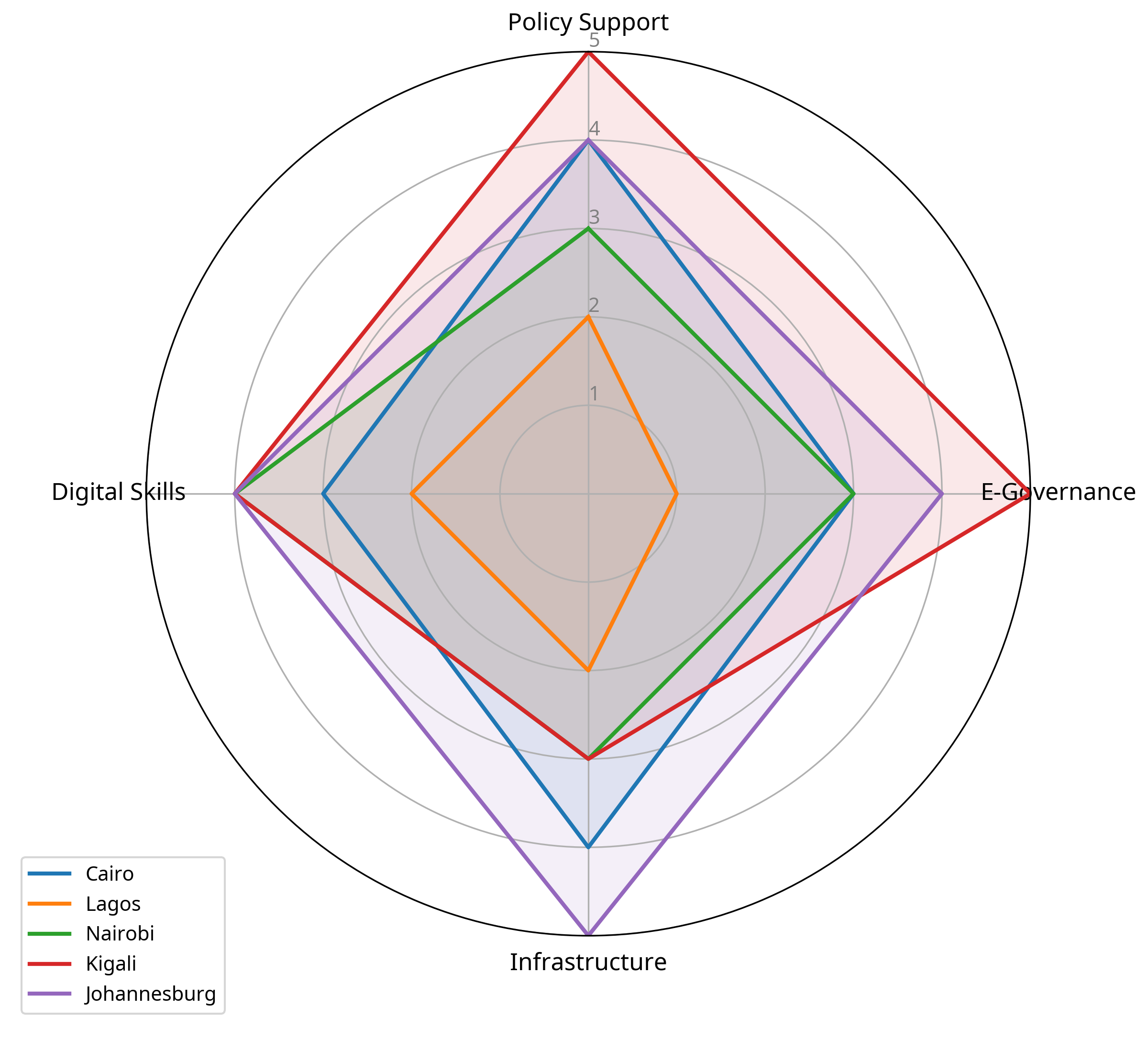
Africa is experiencing the world’s fastest urbanization process, posing enormous challenges to urban governance, public services, and sustainable development. Meanwhile, digital technologies represented by mobile internet are rapidly spreading across the African continent, providing unprecedented opportunities for urban digital transformation. However, existing research either focuses on the macro-geographical patterns of Information and Communication Technology (ICT) development in Africa or on case studies of specific technologies (such as mobile payments), lacking a systematic framework to understand how internet technology comprehensively drives the transformation of urban functions, governance, and service models. Particularly in the context of uneven development across different regions, the challenges faced and response strategies require in-depth exploration. This study constructs an integrated analytical framework of "Technology-Application-Transformation" (TAT). The framework first examines the core elements of internet technology development in Africa (Technology), including mobile network coverage, broadband accessibility, and smartphone penetration; second, it analyzes application patterns in key urban domains (Application), focusing on mobile payments, e-commerce, e-governance, and smart mobility; finally, it evaluates the comprehensive impact of these applications on urban digital transformation (Transformation), selecting typical cities from North Africa (represented by Egypt), West Africa (represented by Nigeria), East Africa (represented by Kenya and Rwanda), and Southern Africa (represented by South Africa) for comparative analysis. The study finds that Africa’s urban digital transformation exhibits distinctive characteristics of "mobile-first" and "leapfrog development." The proliferation of mobile internet has greatly promoted inclusive finance (such as M-Pesa) and new retail formats, with some cities also making positive progress in e-governance and smart transportation (such as Kigali’s smart city construction). However, the transformation process is constrained by multiple factors including uneven digital infrastructure, digital skills shortage, absence of data governance systems, and huge regional development disparities. North and Southern Africa have better transformation foundations, while Central Africa and parts of West Africa lag relatively behind. To promote the healthy development of urban digital transformation in Africa, this study proposes the following strategies: first, implement differentiated national digital strategies with priority investment in affordable broadband infrastructure; second, establish public-private partnerships (PPP) to accelerate the implementation and promotion of smart city solutions; third, vigorously develop digital skills education to bridge the digital divide; fourth, construct adaptive urban data governance frameworks to ensure data security and citizen privacy; fifth, strengthen regional cooperation, share best practices, and jointly build an inclusive and sustainable digital future for Africa.
Downloads
Downloads
Published
How to Cite
Issue
Section
Categories
License
Copyright (c) 2026 Big.D

This work is licensed under a Creative Commons Attribution-NonCommercial-NoDerivatives 4.0 International License.