
Hydraulic Properties of Sapwood from Common African Plants and Their Application in Drinking Water Filtration:A Low-Cost, Sustainable Water Purifification Solution for Rural Africa
DOI:
https://doi.org/10.64504/big.d.v3i2.391Abstract
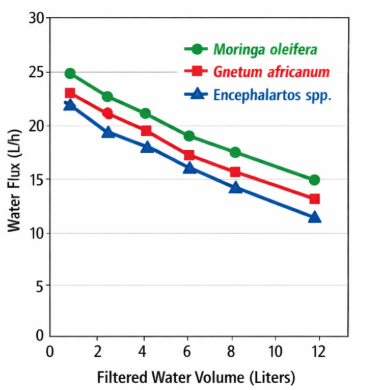
Rural areas in Africa face a severe shortage of clean drinking water, and traditional water purification methods are difficult to popularize d ue to issues such as cost, energy consumption, and sustainability. This study aims to explore the use of sapwood from common native African plants as a low-cost, biodegradable, and easily accessible natural filtration material to address local drinking water safety issues. We selected the common African gymnosperm Gnetum africanum and cycad species (Encephalartos spp.), as well as the angiosperm Moringa o leifera, to systematically study the anatomical structure and hydraulic properties of their sapwood. Scanning electron microscopy (SEM) was used to observe the microscopic structure of the xylem and the morphology of pit membranes. A pressure-driven filtration setup and hydraulic conductance measurement system were used to quantitatively analyze the sapwood's water conductivity, pore size distribution, and filtration efficiency for typical water contaminants such as E. coli. The results show that although the xylem structures of the three plants differ, they all exhibit effective bacterial filtration capabilities. Among them, Moringa oleifera sapwood demonstrated the best overall performance due to its unique wide vessels and simple perforation plates, exhibiting high water fl ux and efficient bacterial retention. The sapwood of Gnetum africanum and Encephalartos spp. also showed potential for application under specific conditions, but their hydraulic efficiency was relatively low. This study successfully constructed a prototype of a low-cost, high-efficiency water filtration device based on plant sapwood. This research provides a new scientific basis and a feasible technical path for developing localized, sustainable water purification technologies suitable for resource-limited areas in Africa. It is expected to significantly improve the drinking water safety of local residents, reduce the transmission risk of waterborne diseases, and holds significant public health importance and application value.
Downloads
Downloads
Published
How to Cite
Issue
Section
Categories
License
Copyright (c) 2026 Big.D

This work is licensed under a Creative Commons Attribution-NonCommercial-NoDerivatives 4.0 International License.