
The Observability Paradox in Artificial Intelligence Ethics: Philosophical Foundations of Explainability and Epistemic Limits in Autonomous Decision Systems
DOI:
https://doi.org/10.64504/big.d.v3i3.773Keywords:
AI ethics; explainable artificial intelligence; epistemic opacity; observability; autonomous decision systems; algorithmic accountability; uncertainty governanceAbstract
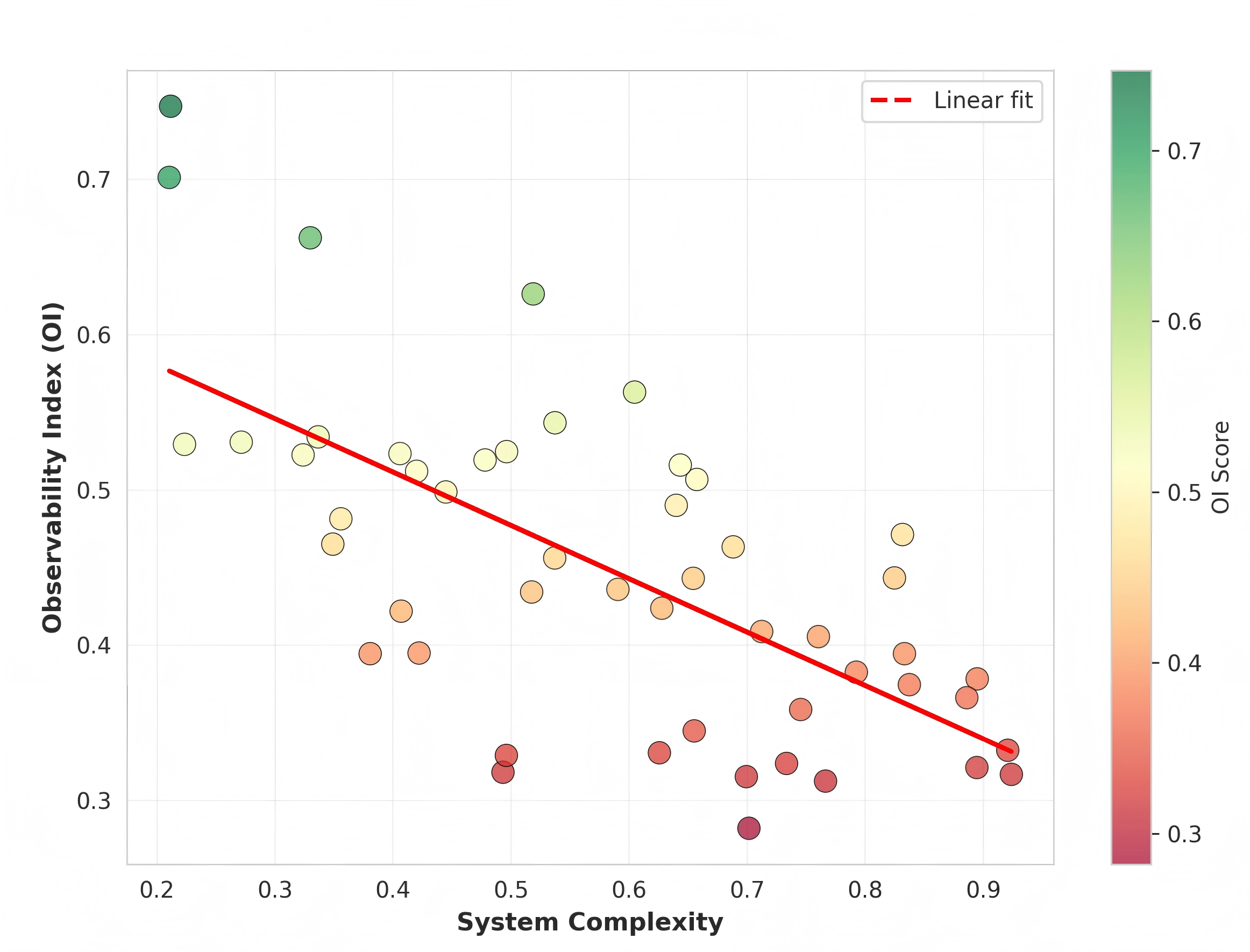
The increasing deployment of autonomous artificial intelligence (AI) systems in high-stakes domains has intensified concerns about transparency, accountability, and ethical assurance. Although explainable AI (XAI) methods such as LIME, SHAP, saliency mapping, and counterfactual explanation have improved the interpretability of model outputs, they often provide local or post-hoc explanations rather than verifiable access to the internal epistemic state of complex AI systems. This study introduces the concept of the observability paradox, defined as the structural tension between the normative demand for transparent AI decision-making and the theoretical and practical limits of observing complex computational processes. To address this problem, we propose the Observation–Inference–Validation (OIV) framework, an epistemic governance model that integrates concepts from AI ethics, philosophy of science, and systems theory. We further develop an Observability Index (OI) to assess the extent to which internal system states can be instrumented, accessed, and statistically associated with system outputs. Using a mixed-methods design, the study evaluates the relationship between system complexity, observability, and user-level outcomes, including perceived understanding, trust, and confidence in error detection. The findings indicate that higher system complexity is associated with lower observability, while OIV-informed explanations improve users’ perceived understanding and trust compared with standard post-hoc explanations. However, improved subjective understanding does not necessarily translate into superior error detection, suggesting a distinction between interpretive confidence and actual epistemic reliability. The study contributes to AI ethics by shifting the focus from the pursuit of complete transparency to the structured management of epistemic limits. The proposed framework provides a theoretical and methodological basis for evaluating, communicating, and governing uncertainty in autonomous decision systems.
Downloads
References
[1]Caruana, R., Lou, Y., Gehrke, J., Koch, P., Sturm, M., & Elhadad, N. (2015, August). Intelligible models for healthcare: Predicting pneumonia risk and hospital 30-day readmission. In Proceedings of the 21th ACM SIGKDD international conference on knowledge discovery and data mining (pp. 1721-1730).
[2]Mittelstadt, B. D., Allo, P., Taddeo, M., Wachter, S., & Floridi, L. (2016). The ethics of algorithms: Mapping the debate. Big data & society, 3(2), 2053951716679679.
[3]Binns, R. (2018, January). Fairness in machine learning: Lessons from political philosophy. In Conference on fairness, accountability and transparency (pp. 149-159). PMLR.
[4]Buolamwini, J., & Gebru, T. (2018, January). Gender shades: Intersectional accuracy disparities in commercial gender classification. In Conference on fairness, accountability and transparency (pp. 77-91). PMLR.
[5]Dressel, J., & Farid, H. (2018). The accuracy, fairness, and limits of predicting recidivism. Science Advances, 4(1), eaao5580.
[6]Ribeiro, M. T., Singh, S., & Guestrin, C. (2016, August). " Why should i trust you?" Explaining the predictions of any classifier. In Proceedings of the 22nd ACM SIGKDD international conference on knowledge discovery and data mining (pp. 1135-1144).
[7]Lundberg, S. M., & Lee, S. I. (2017). A unified approach to interpreting model predictions. Advances in neural information processing systems, 30.
[8]Selvaraju, R. R., Cogswell, M., Das, A., Vedantam, R., Parikh, D., & Batra, D. (2017). Grad-cam: Visual explanations from deep networks via gradient-based localization. In Proceedings of the IEEE international conference on computer vision (pp. 618-626).
[9]Simonyan, K., Vedaldi, A., & Zisserman, A. (2013). Deep inside convolutional networks: Visualising image classification models and saliency maps. arXiv preprint arXiv:1312.6034.
[10]Montavon, G., Samek, W., & Müller, K. R. (2018). Methods for interpreting and understanding deep neural networks. Digital signal processing, 73, 1-15.
[11]Lipton, Z. C. (2018). The mythos of model interpretability: In machine learning, the concept of interpretability is both important and slippery. Queue, 16(3), 31-57.
[12]Doshi-Velez, F., & Kim, B. (2017). Towards a rigorous science of interpretable machine learning. arXiv preprint arXiv:1702.08608.
[13]Mohseni, S., Zarei, N., & Ragan, E. D. (2021). A multidisciplinary survey and framework for design and evaluation of explainable AI systems. ACM Transactions on Interactive Intelligent Systems (TiiS), 11(3-4), 1-45.
[14]Russell, S., Dewey, D., & Tegmark, M. (2015). Research priorities for robust and beneficial artificial intelligence. AI magazine, 36(4), 105-114.
[15]Bostrom, N., & Yudkowsky, E. (2018). The ethics of artificial intelligence. In Artificial intelligence safety and security (pp. 57-69). Chapman and Hall/CRC.
[16]Wallach, W., & Allen, C. (2008). Moral machines: Teaching robots right from wrong. Oxford University Press.
[17]Sharkey, A., & Sharkey, N. (2012). Granny and the robots: ethical issues in robot care for the elderly. Ethics and information technology, 14(1), 27-40.
[18]Winfield, A. F., Michael, K., Pitt, J., & Evers, V. (2019). Machine ethics: The design and governance of ethical AI and autonomous systems [scanning the issue]. Proceedings of the IEEE, 107(3), 509-517.
[19]Wachter, S., Mittelstadt, B., & Russell, C. (2017). Counterfactual explanations without opening the black box: Automated decisions and the GDPR. Harv. JL & Tech., 31, 841.
[20]van Fraassen, B. C. (1980). The Scientific Image. Oxford University Press.
[21]Hacking, I. (1983). Representing and Intervening: Introductory Topics in the Philosophy of Natural Science. Cambridge University Press.
[22]Kalman, R. E. (1963). Mathematical description of linear dynamical systems. Journal of the Society for Industrial and Applied Mathematics, Series A: Control, 1(2), 152-192.
[23]Morley, J., Floridi, L., Kinsey, L., & Elhalal, A. (2021). From what to how: an initial review of publicly available AI ethics tools, methods and research to translate principles into practices. In Ethics, governance, and policies in artificial intelligence (pp. 153-183). Cham: Springer International Publishing.
[24]Rességuier, A., & Rodrigues, R. (2020). AI ethics should not remain toothless! A call to bring back the teeth of ethics. Big Data & Society, 7(2), 2053951720942541.
[25]Floridi, L., & Cowls, J. (2022). A unified framework of five principles for AI in society. Machine learning and the city: Applications in architecture and urban design, 535-545.
[26]Brundage, M., Avin, S., Wang, J., Belfield, H., Krueger, G., Hadfield, G., ... & Anderljung, M. (2020). Toward trustworthy AI development: mechanisms for supporting verifiable claims. arXiv preprint arXiv:2004.07213.
[27]Jobin, A., Ienca, M., & Vayena, E. (2019). The global landscape of AI ethics guidelines. Nature machine intelligence, 1(9), 389-399.
[28]Selbst, A. D., & Barocas, S. (2018). The intuitive appeal of explainable machines. Fordham L. Rev., 87, 1085.
[29]Vallor, S. (2016). Technology and the Virtues: A Philosophical Guide to a Future Worth Wanting. Oxford University Press.
[30]Acemoglu, D., & Robinson, J. A. (2013). Why nations fail: The origins of power, prosperity, and poverty. Crown Currency.
Downloads
Published
How to Cite
Issue
Section
Categories
License
Copyright (c) 2026 Big.D

This work is licensed under a Creative Commons Attribution-NonCommercial-NoDerivatives 4.0 International License.